
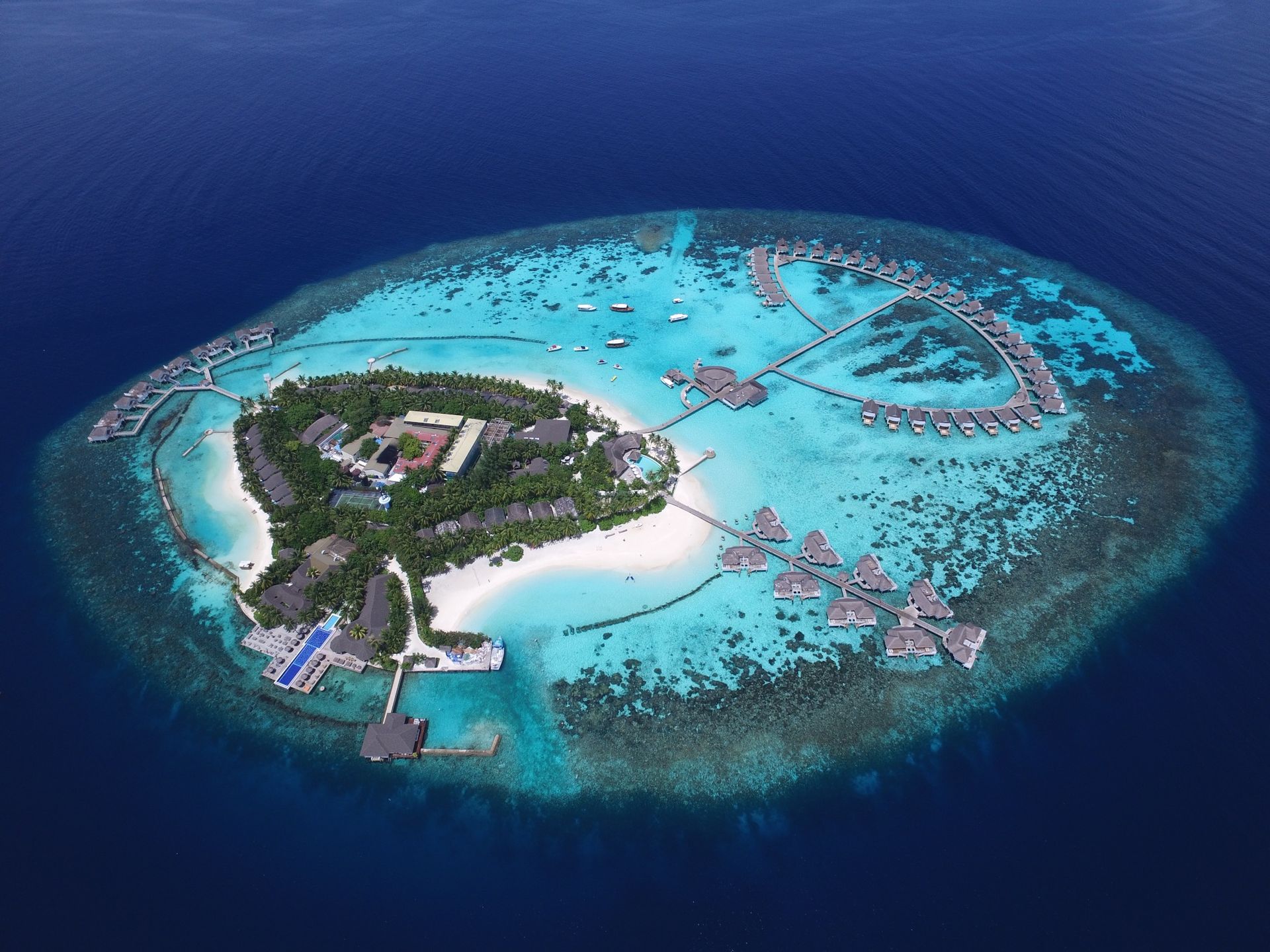
Local-island travel means staying in a guesthouse on an inhabited Maldivian island rather than a private resort island — and it now accounts for roughly 26% of all arrivals, the fastest-growing segment in the country. A guesthouse room runs $40–$120 USD per night as of August 2026, compared with $300–$1,500+ for a resort, and you get real village life, local restaurants, and access to the same reefs and sandbanks resorts charge a premium for. The trade-off is transport: you'll rely on public ferries and speedboats rather than a private resort launch, and some excursions (whale sharks, manta dives) are still booked through local dive centres rather than an in-house resort desk. This guide covers where to base yourself, how to move between islands, what it costs, and when to go.
The system exists because Maldivian law long restricted tourism to designated resort islands; that changed in 2009, opening inhabited islands to guesthouses. Since then, atolls like Addu, Ari and Gaafu Alifu have built genuine budget-to-midrange scenes. If you want the full mechanics of ferries, ferry timetables and speedboat charters between islands, we've written a dedicated piece on how to travel between local islands in the Maldives — read that alongside this guide before you book anything.
What exactly is a "local island" and how is it different from a resort island?
A local island is an inhabited Maldivian community — with a school, a mosque, shops, and a permanent population — that also hosts one or more guesthouses. A resort island, by contrast, is typically leased whole to a single operator and has no local residents. Staying on an inhabited local island means you eat where locals eat, follow local dress and alcohol norms (most local islands are dry, with alcohol served only on a handful of designated "bikini beaches" or nearby uninhabited sandbanks), and pay local-island prices for food, transport and excursions. It's a fundamentally different trip from a resort stay, not a cheaper version of the same one.
Which atolls have the best local-island infrastructure?
Not every atoll is equally set up for independent travel. The most established local-island circuits are:
- South Ari Atoll — the busiest guesthouse hub, close to whale shark grounds and dive sites like Kuda Thila and Bandos Corner-style reef formations; strong ferry and speedboat links to Male.
- Addu Atoll — the southernmost atoll, linked by a causeway connecting islands including Hithadhoo, Maradhoo, Feydhoo and Hulhudhoo, so you can island-hop by road rather than boat.
- Fuvahmulah — a single-island atoll famed for tiger shark diving, with its own domestic airport.
- Gaafu Alifu / Gaafu Dhaalu — islands such as Thinadhoo and Vaadhoo offer quieter, less touristed guesthouse scenes with good reef access.
Browse the full atolls overview to see how each region connects to Male and to the international airport before you commit to a base.
How do you get between local islands?
Three options exist, and most trips combine at least two of them. Public ferries are by far the cheapest way to move around and connect Male to most inhabited islands, though schedules can be sparse — sometimes a few times a week rather than daily. Speedboat transfers cost more but run faster and more frequently, typically $100–$250 USD return depending on distance from Male. Domestic flights and seaplanes ($350–$650 USD return) matter mainly for reaching far-flung atolls like Fuvahmulah or Addu quickly, or for combining a local-island stay with a resort stopover. For the full breakdown of routes, operators and timetables, see our detailed guide on travelling between local islands, and the atlas page on getting around the Maldives for the bigger transport picture.
What does a local-island trip actually cost?
Guesthouse travel is the main reason the "you need $10,000 for the Maldives" myth is false. A realistic week on a local island looks like guesthouse accommodation, ferry or speedboat transfers, a couple of paid excursions, and eating at local cafes.
Cost item | Typical range (per person, as of August 2026) | Notes |
|---|---|---|
Guesthouse room | $40–$120 USD/night | Varies by island and season; South Ari and Male-adjacent islands sit at the higher end |
Speedboat transfer | $100–$250 USD return | Faster and pricier than public ferry, still far below seaplane cost |
Public ferry | $10-$50 | Government-subsidised, cheapest option but limited schedule |
Seaplane transfer | $350–$650 USD return | Only needed for far atolls or combining with a resort leg |
Whale shark / manta excursion | $80–$150 USD per person | Booked through local dive centres, not resort desks |
For line-by-line real budgets ranging from backpacker to splurge, our post how much a Maldives trip costs in 2026 walks through actual itineraries at each price point, including several built entirely around guesthouses. The atlas page on the Maldives on any budget is worth bookmarking too, since it covers how to mix a few resort nights with a longer local-island stay without blowing the budget.
When is the best time to go island-hopping?
Dry season, December to April, brings the calmest seas and the most reliable ferry schedules — useful if your itinerary depends on hopping between two or three islands. Manta season runs May to November, centred on Hanifaru Bay in Baa Atoll, and is worth timing a local-island stay in the north around if manta rays are the priority. Surfers should aim for April to October, when swell is most consistent on the outer-atoll breaks. Full seasonal detail, including rainfall and wind patterns by month, is on the atlas page for the best time to visit.
Do you need a visa, and what else should you plan for?
All nationalities receive a free 30-day visa on arrival, but requirements are reviewed periodically, so check the atlas guide to visa and entry requirements before booking flights. Beyond paperwork, plan for modest dress on inhabited islands (swimwear is for designated bikini beaches only), limited or no alcohol availability outside a few licensed guesthouse restaurants, and cash on hand for smaller islands where card machines can be unreliable. Average stay across the Maldives runs around 7 days, and that's a sensible minimum if you want time to island-hop rather than just sit on one guesthouse's beach.
Should you combine a local island with a few resort nights?
Many travellers now split their week: three or four nights on a local island for the culture, food and lower cost, then two or three nights at a resort for the overwater bungalow photos and house-reef snorkelling. This hybrid trip has become common enough that our 7-day Maldives itinerary includes versions built around exactly this split, with 5, 10 and 14-day variations for longer or shorter trips. If you go this route, a mid-range resort near your local-island base cuts transfer time and cost — properties like Sheraton Maldives Full Moon Resort & Spa or OBLU SELECT Sangeli sit close enough to Male to pair easily with a South Male or North Male local-island stay.
Where should you actually stay?
Guesthouse quality varies a lot island to island, so it pays to book somewhere with a track record rather than the cheapest listing you find. On the guesthouse end, Courtyard Guesthouse and The Barefoot Eco Hotel are solid, well-reviewed options built specifically around independent travellers rather than repackaged resort service. If you want a slightly larger property with more amenities but still local-island pricing, Ari Grand Hotel & Spa Maldives, AraamView Maldives and Summer Beach Maldives sit in that middle tier. Full listings and comparisons live on the atlas where to stay section, which lets you filter by island and atoll rather than just by star rating.
What can you actually do once you're based on a local island?
Diving and snorkelling are the main draws, and local-island dive centres run trips to the same sites resorts use, including Beyru Ha Thila, Fonadhoo Kandu, Dhiggaru Kandu, Footi Left and Gaadhiffushi Caves, depending on which atoll you're based in. Our full dive sites section maps these by atoll and depth. Surfers based near the outer atolls can reach breaks detailed in the surf spots guide, and almost every guesthouse can arrange a day trip to a nearby uninhabited sandbank for a private-island afternoon without the private-island price tag. For context on how guesthouse tourism has grown into this ecosystem, see our reporting on guesthouses as a rising trend for the modern explorer.
Plan your trip
Start by picking an atoll from the atolls overview based on what you want — South Ari for whale sharks, Addu for a road-connected island cluster, or Fuvahmulah for tiger sharks — then check the best time to visit against that priority. Confirm your visa requirements, book a guesthouse from where to stay, and work out your ferry and speedboat routes early since schedules are limited compared with resort transfers.
Frequently asked questions
How much does a local-island guesthouse cost in the Maldives?
Guesthouse rooms run $40 to $120 USD per night as of August 2026, depending on the island and season. This compares with $300 to $1,500 or more per night at a private resort, making guesthouses the main reason a Maldives trip can be done on a modest budget.
Can you drink alcohol on a local island?
Most inhabited local islands are dry under Maldivian law, so alcohol is not sold in general shops or most guesthouses. Some guesthouses and nearby resorts hold special licenses, and day trips to uninhabited sandbanks or bikini beaches are the usual workaround.
How do you get from Male to a local island?
Public ferries are the cheapest option, though schedules can run only a few times a week on some routes. Speedboat transfers cost $100 to $250 USD return and run faster and more often, while domestic flights or seaplanes are used mainly for far atolls like Addu or Fuvahmulah.
Is local-island travel safe and easy for first-time visitors?
Yes, local-island tourism has operated since 2009 and is well established in atolls like South Ari and Addu. First-timers should just plan around dress codes, alcohol restrictions, and ferry schedules, which are less flexible than resort transfers.
What is the best atoll for local-island travel?
South Ari Atoll has the most developed guesthouse scene and easy access to whale shark excursions, while Addu Atoll offers a road-connected cluster of islands including Hithadhoo and Feydhoo. Fuvahmulah is best for tiger shark diving and has its own airport.
Can you combine a local island stay with a resort stay?
Yes, a common approach is three or four nights on a local island followed by two or three nights at a resort, splitting cost savings with resort-style comfort. Choosing a resort close to Male, such as one in South or North Male Atoll, keeps transfer costs and time down.
Do local islands have good diving and snorkelling?
Yes, local-island dive centres run trips to many of the same sites resorts use, including reef and channel dives across South Ari and other atolls. Whale shark and manta ray excursions typically cost $80 to $150 USD per person and are booked directly through local operators.
How long should a local-island Maldives trip be?
The average visitor stay in the Maldives is around 7 days, which is enough time to base on one or two local islands and add a day trip or two. Longer 10 to 14-day trips allow for island-hopping across an atoll or combining a local-island stay with a resort finish.
Do I need a visa to visit local islands in the Maldives?
Most nationalities receive a free 30-day visa on arrival regardless of whether they're staying at a resort or a local island. Requirements are reviewed periodically, so it's worth checking current entry rules before booking flights.
When is the best time for local-island travel in the Maldives?
December to April is the dry season with the calmest seas and most reliable ferry schedules, making it easiest for island-hopping. Manta season from May to November centres on Hanifaru Bay in Baa Atoll, and surf season runs April to October on the outer-atoll breaks.