
The Maldives recorded 2.25 million visitor arrivals in 2025, up 9.8% year-on-year, making it one of the fastest-growing arrival curves in the Indian Ocean region. Russia is the top source market, followed by Italy, the UK, Germany, the USA, China and India. Guesthouses are the fastest-growing accommodation segment, now representing roughly 26% of arrivals, while the average stay across all visitor types sits at around 7 days. Demand peaks in the December–April dry season, with a secondary surge in surf season (April–October) and manta season (May–November) around Hanifaru Bay in Baa Atoll. This page breaks down what the numbers mean month by month, so you can read the data the way a tour operator does — not just as a headline figure, but as a planning tool for flights, transfers and where to stay.
How many tourists visited the Maldives in 2025?
2.25 million visitors arrived in the Maldives in 2025, an increase of 9.8% over the prior year. That growth rate outpaces most competing Indian Ocean destinations and reflects both new resort supply and the continued rise of budget-friendly guesthouse stays on inhabited local islands. The average length of stay across all segments is approximately 7 days, which lines up neatly with the classic 7-day Maldives itinerary that most first-time visitors follow, though 10- and 14-day versions are increasingly common among repeat travelers chasing multiple atolls.
Arrivals are not evenly spread across the year. The dry season from December through April remains the highest-demand window, driven heavily by European winter escape travel, while a secondary demand bump occurs during surf season and manta season as specialist travelers — surfers, divers, and underwater photographers — book around specific weather and wildlife windows rather than generic "best weather."
Which countries send the most tourists to the Maldives?
The top seven source markets, in order, are Russia, Italy, the UK, Germany, the USA, China and India. This ranking matters for anyone tracking resort pricing and availability, because each market has a distinct booking calendar: Russian and European demand clusters around their winter holidays and school breaks, Chinese demand follows Lunar New Year and Golden Week, and Indian demand has grown steadily alongside expanded regional flight connections. The presence of the USA in the top five also explains the recent wave of ultra-luxury openings — properties like Atlantis The Royal and the incoming Bulgari Ranfushi are positioned squarely at that market.
Source market | Rank (2025) | Typical peak booking window |
|---|---|---|
Russia | 1 | December–February, May holidays |
Italy | 2 | August, Christmas–New Year |
UK | 3 | December–March, half-term breaks |
Germany | 4 | Summer months, Christmas |
USA | 5 | Winter and spring, honeymoon season year-round |
China | 6 | Lunar New Year, Golden Week (October) |
India | 7 | School holidays, festive periods |
What percentage of visitors stay in guesthouses versus resorts?
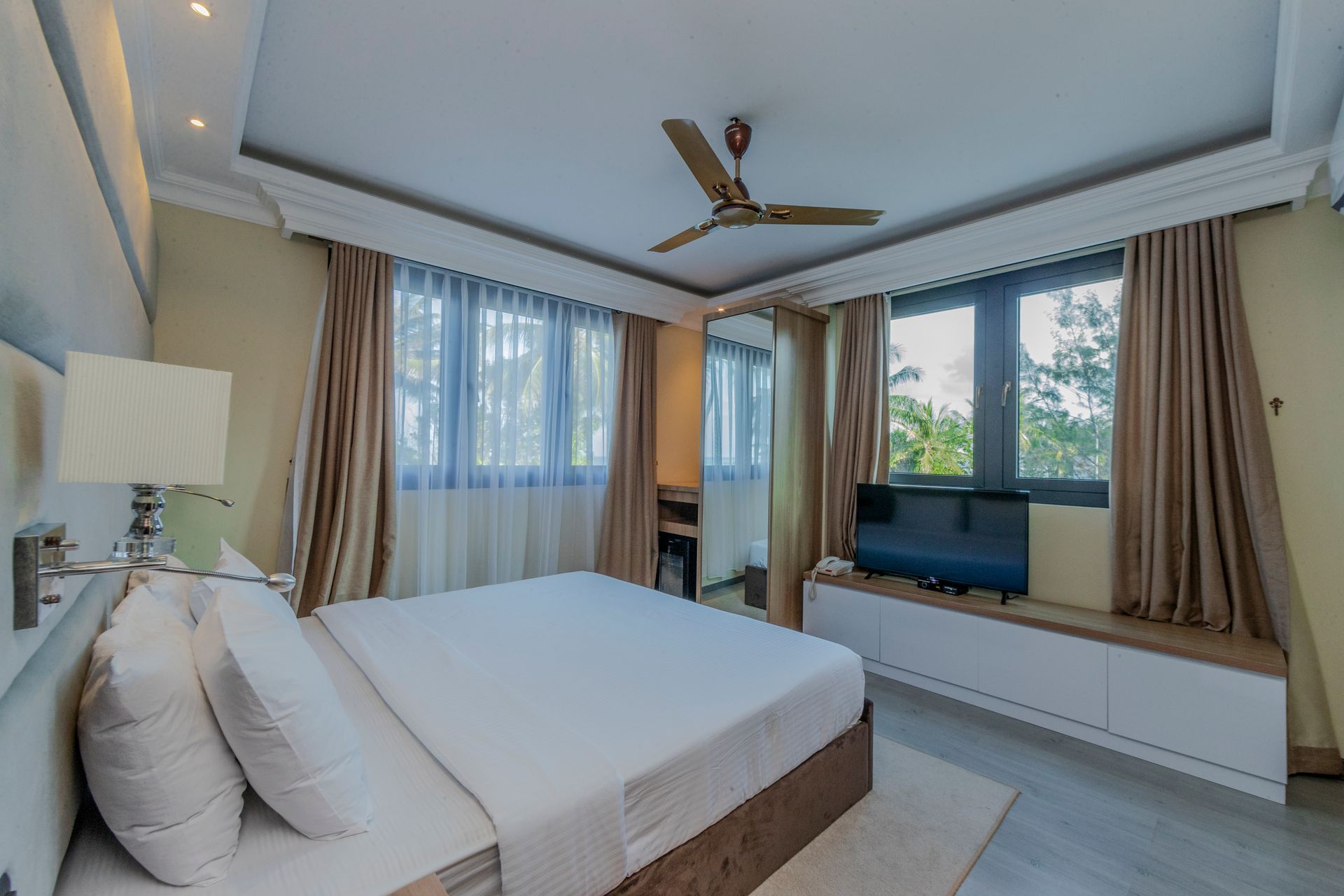
Guesthouses now account for roughly 26% of total arrivals, making them the fastest-growing segment of the market. This shift is largely driven by budget-conscious travelers and repeat visitors who have already done the overwater-villa resort experience and want to explore inhabited local islands instead. A guesthouse stay typically runs $40–$120 USD per night, compared with $300–$1,500 USD per night (and considerably higher at the ultra-luxury end) for a resort room. That price gap, combined with cheaper speedboat transfers instead of seaplanes, is why budget travel guides increasingly point first-timers toward islands like Maafushi — see our roundup of the top guesthouses in Maafushi Island — before they consider a private-island resort.
For travelers weighing both ends of the spectrum, it helps to compare actual per-night costs side by side rather than relying on marketing copy.
Accommodation type | Typical price per night | Transfer type usually paired |
|---|---|---|
Guesthouse (local island) | $40–$120 USD | Speedboat, $100–$250 USD return |
Mid-range resort | $300–$700 USD | Speedboat or seaplane |
Luxury / ultra-luxury resort | $700–$1,500+ USD | Seaplane, $350–$650 USD return |
Properties such as the Courtyard Guesthouse and The Barefoot Eco Hotel sit at the accessible end of this range, while resorts like Milaidhoo Maldives represent the higher end of the seaplane-access tier. For a fuller framework on matching budget to accommodation type, see our guide to the Maldives on any budget.
When is the Maldives busiest and quietest by season?
The dry season, December through April, is unambiguously the busiest period, coinciding with the northern hemisphere winter and the bulk of European and Russian departures. This is when resort rates peak and seaplane transfer demand is highest, sometimes stretching wait times at Velana International Airport. Surf season, April through October, brings a distinct wave of visitors to the outer atolls' breaks, detailed on our Maldives surf spots page, while manta and whale shark season, May through November, concentrates demand specifically around Hanifaru Bay in Baa Atoll, where whale shark excursions run $80–$150 USD per person. These overlapping calendars mean "low season" isn't uniformly quiet — a diver-heavy atoll can be full in August while a honeymoon-focused resort elsewhere sits at half capacity. Our best time to visit page breaks this down atoll by atoll.
How does the average length of stay affect trip planning?
At roughly 7 days average, most itineraries are built around a single resort or a resort-plus-guesthouse split, rather than the whirlwind multi-island hopping common in other archipelago destinations. This is reflected in how transfers are priced: a seaplane return ($350–$650 USD) or speedboat return ($100–$250 USD) is usually a one-time cost per trip, not a recurring one, because most visitors don't island-hop mid-stay. Travelers extending beyond a week increasingly split their nights between an atoll resort and a local-island guesthouse to control costs, a pattern covered in depth in our piece on guesthouse travel trends. Getting between islands for this kind of split stay is straightforward once you understand the ferry and speedboat network, outlined on our getting around the Maldives page.
What do the new resort openings mean for future arrival numbers?
Announced openings for 2026–2029 include Bulgari Ranfushi, Mandarin Oriental Bolidhuffaru, Mondrian, Meliá Whale Lagoon, Rah Gili, Rosewood Ranfaru, Corinthia, and Atlantis The Royal. This wave of new supply, concentrated at the luxury and ultra-luxury tier, signals that operators expect continued growth in high-spending source markets like the USA and China rather than a plateau. It also means more atolls will gain direct resort access, likely easing pressure on the currently busiest hubs. Anyone comparing where this capacity is landing should start with our atolls overview, which maps which regions are seeing the most development activity.
How do visa rules affect the monthly arrival data?
The Maldives issues visas on arrival for most nationalities, which removes one of the biggest friction points that suppresses tourism numbers elsewhere. This policy is a meaningful factor behind the steady 9.8% growth rate, since travelers from all seven top source markets can book with short lead times without a separate visa application process. Full details, including documentation and stay duration, are covered on our visa and entry requirements page.
Plan your trip
With 2.25 million arrivals in 2025 and guesthouses now making up about 26% of that total, the Maldives offers more flexible planning than its luxury-resort reputation suggests. Decide first whether you're chasing dry-season calm, surf swell, or manta season at Hanifaru Bay, then match your best time to visit window to a stay type using our budget guide and the getting around the Maldives basics before booking transfers.